
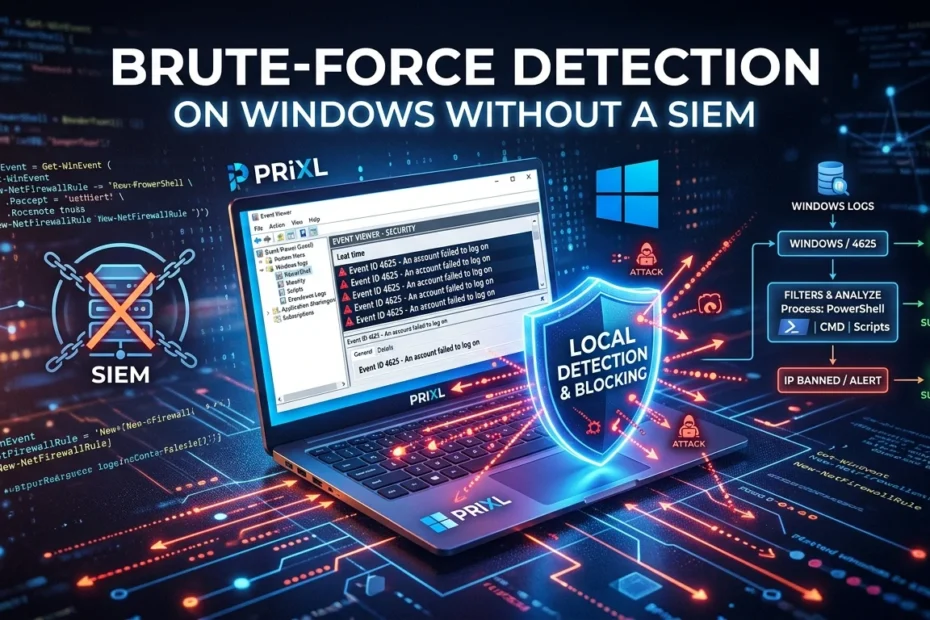
Brute-Force Detection on Windows Without a SIEM
A do-it-yourself guide for the person who looks after a small office server: the event IDs that reveal brute-force attacks and a PowerShell script that turns them into alerts.
A do-it-yourself guide for the person who looks after a small office server: the event IDs that reveal brute-force attacks and a PowerShell script that turns them into alerts.

What PowerShell script block logging records (event 4104), where to find it, and how to turn it on for Windows PowerShell and PowerShell 7, remove the 2.0 engine and size the log.

One server holds every client’s books, returns and portal passwords, and the duties that come with that data sit with the partners. What applies (ICAI, IT Act, CERT-In, DPDP), a yearly budget in rupees, and…

Stolen passwords are often used at night and at weekends. Why after-hours login monitoring works, how to set working hours in Warden, and what to do when an alert fires.

Most small firms find out about a break-in late, and from someone else. Why simple security beats a pile of tools, and the few warning signs on a Windows server worth watching every day.

Default passwords on routers, CCTV recorders, NAS boxes and the Windows Administrator account are public knowledge. Where they hide in a small office and how to fix them.
Attackers now exploit new flaws within days, and older Windows Server versions get no fixes at all. Why updates matter, what WannaCry and PrintNightmare teach, and a patching routine for a small office.

You already type OTPs for your bank and tax portals. Here is how two-factor authentication protects your email and office server, what it does not stop, and how to add it to Remote Desktop.
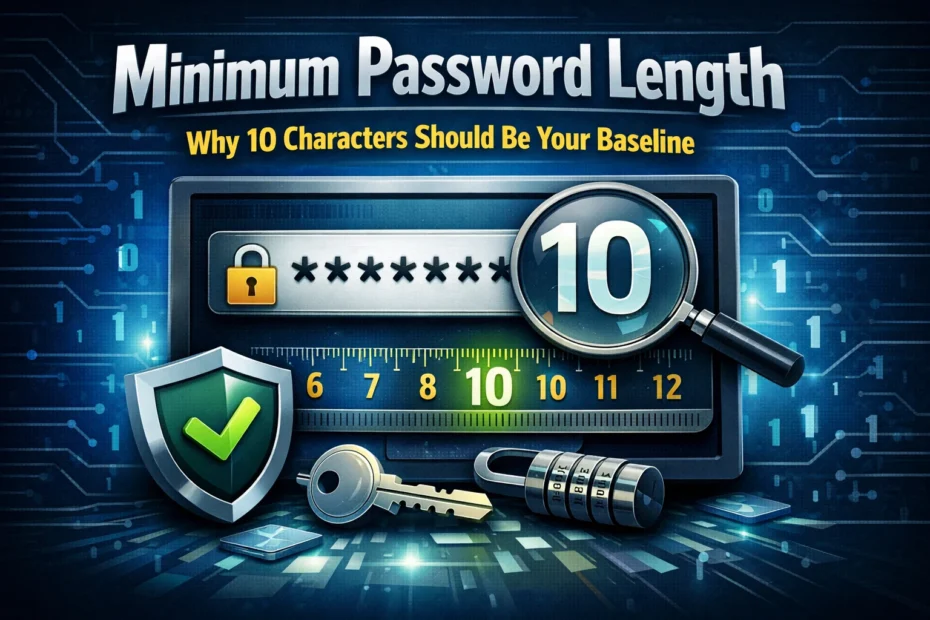
NIST now sets 15 characters as the minimum for a password used on its own. How to check and set the minimum password length on Windows Server, including the 14-character ceiling on Server 2016 and…

How to change the Remote Desktop port on Windows Server safely, with PowerShell and a scoped firewall rule, and why a new port only cuts log noise rather than stopping attacks.